The Future Is Right
In Front of Our Eyes.
Most In-Demand Themes
-
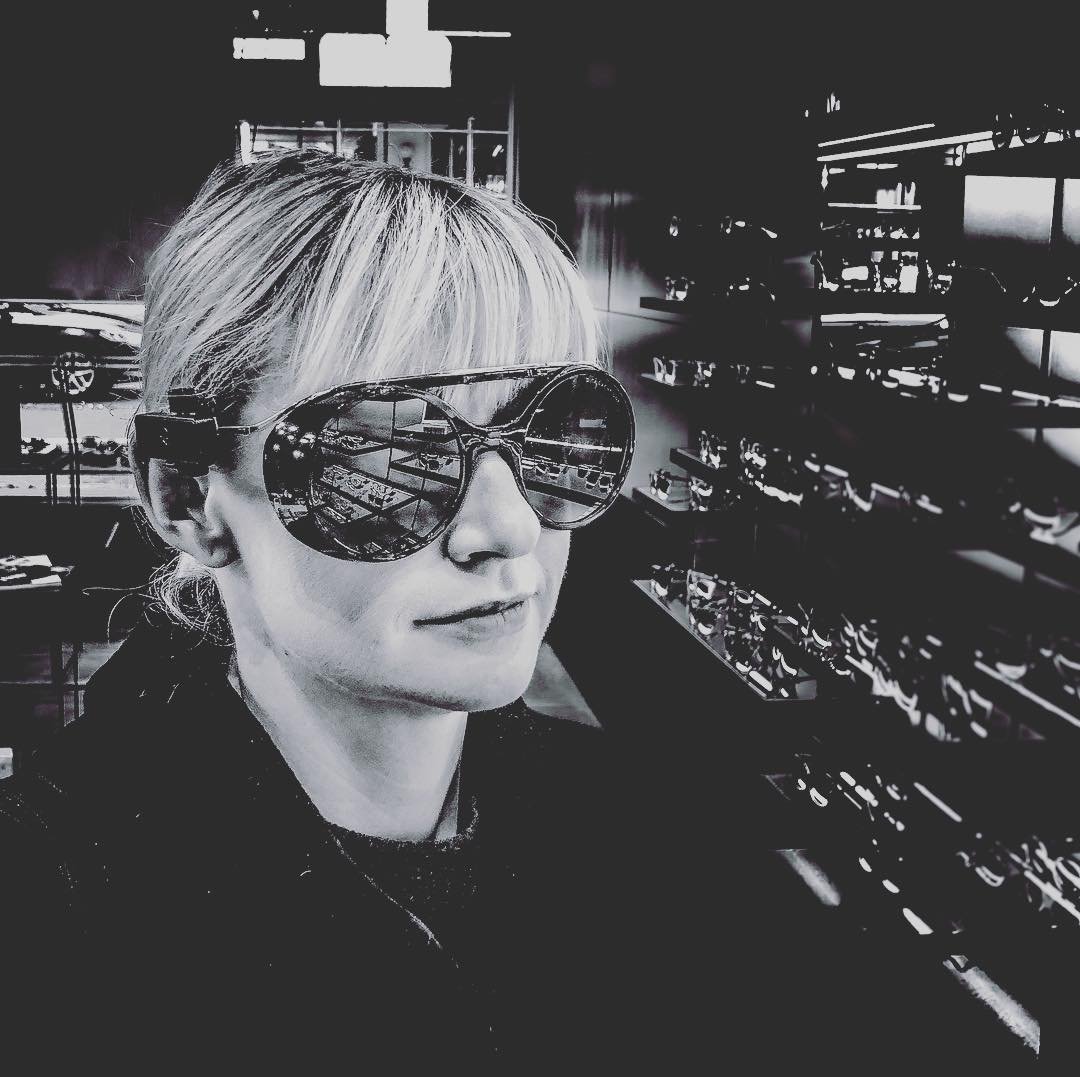
We’re no longer moving toward the next computing era—we’re watching it arrive on our faces. Smartglasses are shifting digital experiences out of phones and laptops and into the physical world, where information doesn’t live on a screen—it lives in front of your eyes. Paired with AI, these devices won’t just display content. They’ll understand context, anticipate needs, and help us act in real time.
In this keynote, we’ll cut through the hype to understand what smartglasses really are (and what they’re not), why this moment is different from past waves of wearables, and how AI turns glasses into something far more powerful than a heads-up display. We’ll explore the real-world use cases that are scaling first—from frontline operations to customer experience to field service—along with what leaders need to get right around adoption, privacy, trust, and ROI. This is a practical roadmap for the “ambient” future: a world where computing fades into the background and your environment becomes the interface.
Audience:
Business and organizational leaders who want to understand the strategic implications of smartglasses, AI, and spatial computing
Innovation and digital transformation professionals tracking the next interface shift beyond mobile
Product, UX, and engineering leaders building for new interaction models
HR, L&D, and operations leaders exploring real-time performance support and training at scale
-
The hard part of smartglasses isn’t the hardware—it’s the humans. Wearables have a long history of impressive demos and disappointing adoption, not because the technology wasn’t “cool,” but because it didn’t fit into real life. People won’t wear something on their face unless it earns its place quickly, clearly, and repeatedly.
In this keynote, we’ll explore why past waves of smartglasses struggled and what’s changed now—lighter devices, better optics, stronger ecosystems, and AI that makes the experience genuinely useful. More importantly, we’ll break down what actually drives adoption: comfort, trust, workflow fit, social acceptance, and proving value in minutes—not months. You’ll learn how to choose the right first use cases, avoid “pilot theater,” and design programs that scale responsibly. If your organization wants smartglasses to deliver real impact (not just headlines), this talk offers the playbook.
Audience:
CIO/CTO and IT leaders responsible for device rollouts, governance, and security
Operations leaders in frontline-heavy industries (manufacturing, logistics, healthcare, field service)
HR, L&D, and training teams focused on adoption and behavior change
Innovation teams running pilots who want a path to scaling
Product and customer experience leaders exploring wearable-enabled services
-
Most training fails for one simple reason: it happens far away from the moment people actually need it. We teach skills in classrooms, courses, and videos—then expect perfect performance under pressure, on the floor, in the field, or with a customer. Smartglasses change that by turning learning into something that can live inside the work itself.
In this keynote, we’ll explore the shift from training to performance enablement. VR helps people build confidence through realistic practice before stakes are high. Smartglasses then support them when stakes are high—with guidance, prompts, and visual instruction right in their line of sight. AI completes the loop by personalizing support, spotting patterns, and helping organizations continuously improve. We’ll look at practical applications like onboarding, safety, technical procedures, and customer interactions—plus how to measure what matters: time-to-proficiency, error reduction, incident prevention, retention, and performance consistency.
Audience:
L&D, HR, and talent leaders modernizing training and onboarding
Safety, compliance, and quality leaders reducing risk and errors
Operations leaders improving performance consistency across teams
Educators and workforce development organizations exploring applied learning
Innovation teams looking for measurable, human-centered AI/XR use cases
-
We are just now starting to put together the pieces of the coming iteration of the internet. From spatial computing and virtual reality to artificial intelligence to digital twins, this nascent technology will power the way we live our lives in the near future. But very few people understand the intersections and implications of this, and how to build for a future where we have digital twins, AI powered assistants and friends, and spend most of our time consuming content millimeters from our eyes.
Designed for both visionaries and practitioners, this session doesn’t just map the future, it equips you to build for it. We’ll explore how hyper-personalized content, AI-powered decision-making, and immersive social environments are becoming everyday norms. You'll learn how to design for this spatial age, from hardware and software to behavior and values, and how to create meaningful, many-to-many experiences in a world that blends reality and representation.
Audience:
Business leaders and strategists seeking to future-proof their products, services, and teams.
Innovation and R&D executives tasked with integrating emerging tech into roadmaps.
Product designers and UX professionals developing for spatial, immersive, and AI-enhanced environments.
Developers and technologists building the infrastructure of the next-generation internet.
Marketers and media creators exploring hyper-personalized content delivery in digital-physical spaces.
Educators, futurists, and analysts tracking the convergence of digital identity, behavior, and society.
Investors and startup founders looking to identify high-impact opportunities in XR and AI convergence.
-
We’re entering a new era where the most valuable platform isn’t a feed—it’s your field of view. When people wear displays and cameras, the way we search, shop, navigate, and make decisions changes fundamentally. In the “seeing economy,” context becomes everything: what you’re looking at, where you are, what you’re trying to do, and what you’re about to do next.
In this keynote, we’ll explore what happens when the physical world becomes interactive and AI becomes your real-time mediator of reality. We’ll unpack the opportunities—contextual commerce, visual search, guided experiences, real-world storytelling—and the risks: privacy, bystander consent, manipulation, and attention capture that feels intrusive. This talk offers a clear framework for building spatial experiences that people actually trust: transparent, useful, respectful, and designed for humans first. If smartglasses are the next interface, the real question is: what kind of interface do we want to build?
Audience:
Brand, marketing, and retail leaders preparing for new consumer behaviors
Product, UX, and innovation teams building spatial experiences
Media and entertainment leaders exploring real-world storytelling
Policy, ethics, and trust & safety professionals shaping responsible standards
-
We’re not just building apps or platforms anymore, we’re building environments, economies, and experiences that blur the lines between the physical and digital. The meta-physical world isn’t a sci-fi fantasy; it’s the next layer of our daily lives, where spatial computing, AI, and immersive storytelling converge to reshape how we work, connect, and create.
This keynote is a practical guide for professionals responsible for imagining and orchestrating this future. It explores how to design spaces where digital twins, intelligent agents, and immersive content are foundational. You'll learn how to map human needs onto emerging tech, create systems that scale emotionally as well as technologically, and build experiences that people want to inhabit, not just visit.
Audience:
Experience and spatial designers developing environments that blend physical and digital.
Creative producers and showrunners orchestrating cross-functional XR/AI projects.
Futurists and strategists shaping next-gen ecosystems for brands, governments, or cultural institutions.
Innovation and transformation leads tasked with envisioning future-facing products and services.
Curators, architects, and placemakers reimagining presence, place, and interaction in hybrid realities.
Content and narrative designers working at the intersection of storytelling and interactivity.
Program and project leads managing multi-platform, multi-stakeholder immersive initiatives.

Speaking Videos
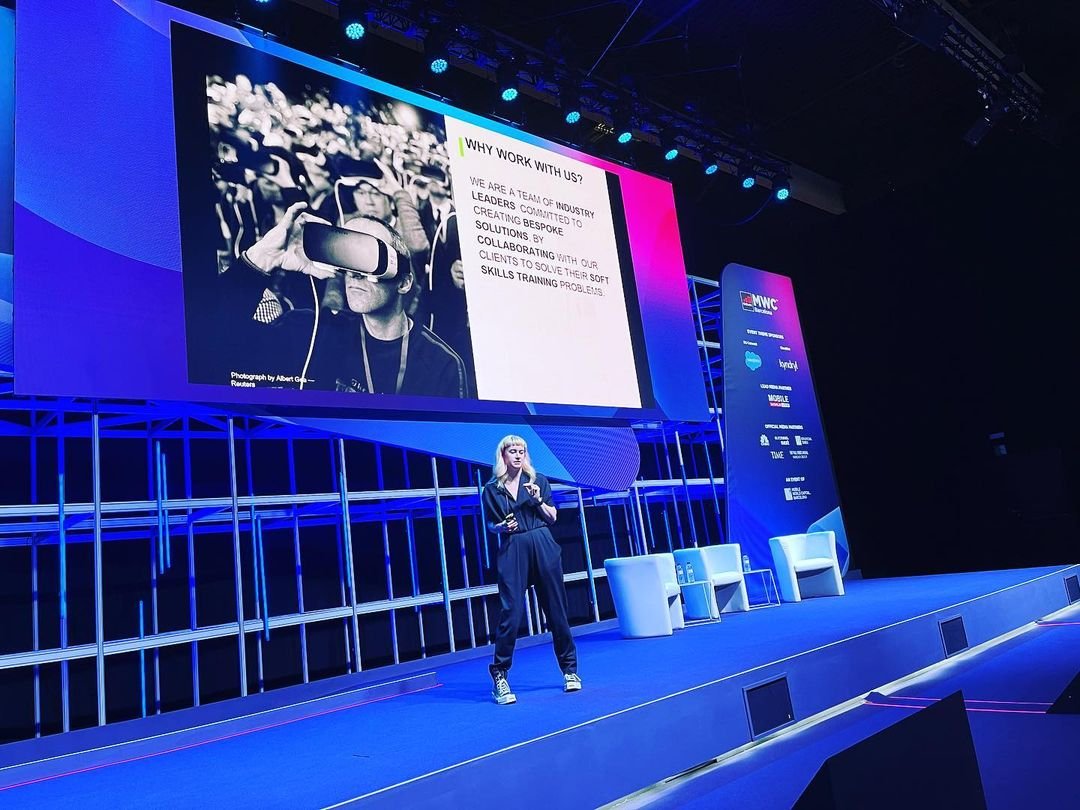
Here are some examples of Cortney in action
Keynote
Artificial intelligence, VR, and now smartglasses are rapidly becoming the next major interface—yet for even the most seasoned executives, this shift can feel like uncharted territory. The opportunity is enormous, but so is the confusion: hype cycles, unclear ROI, privacy and regulatory pressure, and new platforms that behave nothing like the web or mobile. What’s different this time is simple: the future isn’t coming through a screen. It’s showing up in front of our eyes.
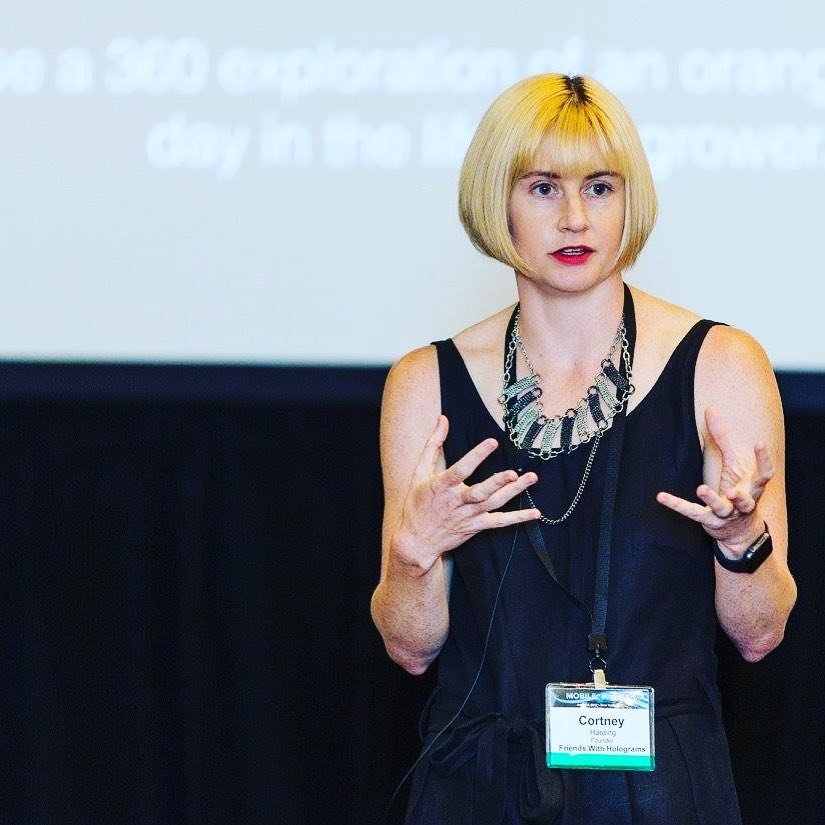
In this engaging talk, futurist and immersive technology strategist Cortney Harding cuts through the buzzwords to explain what smartglasses actually are, how they converge with AI and VR, and why this moment marks a fundamental change in how people work, learn, and make decisions. Drawing on her experience leading Friends with Holograms, the transformational VR/AR agency known for creating powerful training experiences, Cortney shares the practical use cases scaling first—along with the adoption, trust, and governance decisions leaders must get right to avoid “pilot theater” and build programs that stick.
A new vocabulary is emerging—spatial interfaces, multimodal AI, contextual computing, real-time guidance—and organizations that can’t translate it won’t move with confidence. This keynote gives audiences a clear framework, shared language, and actionable starting points to evaluate opportunities, reduce risk, and build advantage as smartglasses move from novelty to normal and the world itself becomes the interface.


Key Takeaways
-
How to strategically prepare for smartglasses, AI, and VR
-
The key questions leaders must answer before building or buying
-
Myths vs. realities of the “future in front of our eyes”
-
The essential new vocabulary of spatial computing
“Cortney turns buzzwords into blueprints. You’ll be ready to design products—and careers—that thrive when the physical and digital finally blur.”
Amy Peck, Executive Advisor, Booz Allen Hamilton
How can I help?
I need a consultant to help me be future proof.
Let’s chat >
I want to work with one of the top women in emerging tech.
Request Cortney’s services deck >
I’m a conference or event looking for a speaker.
Book Cortney >
I look forward to connecting with you,